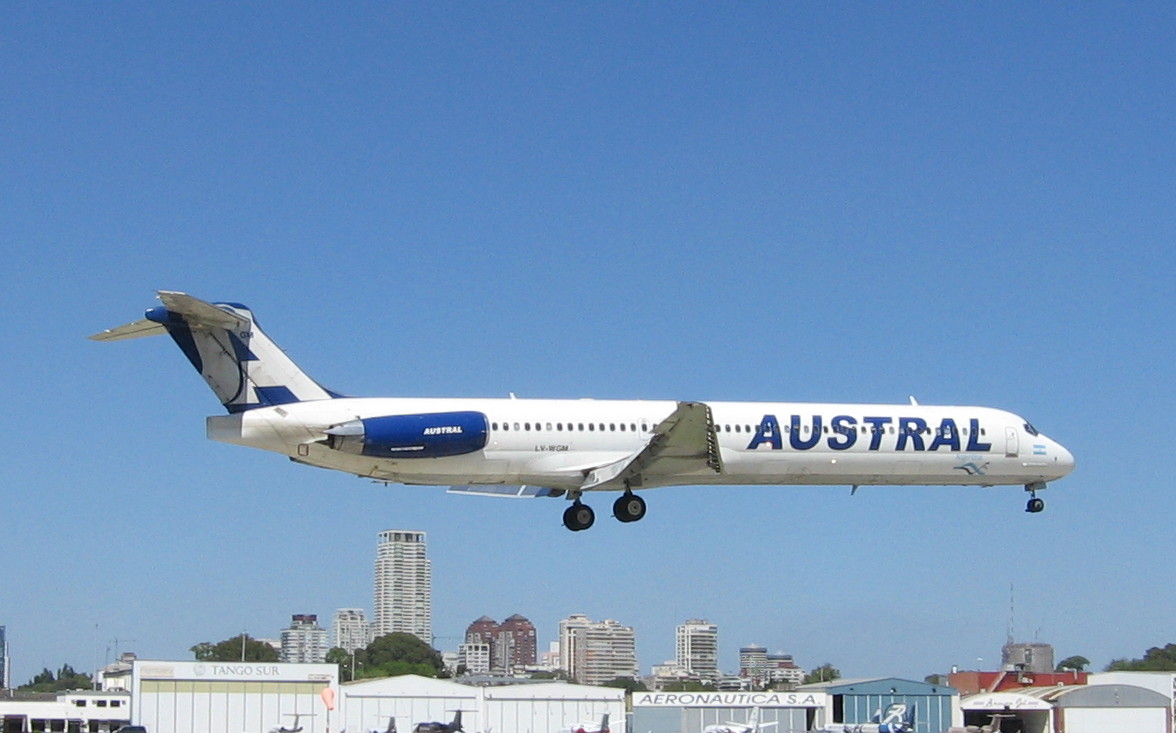
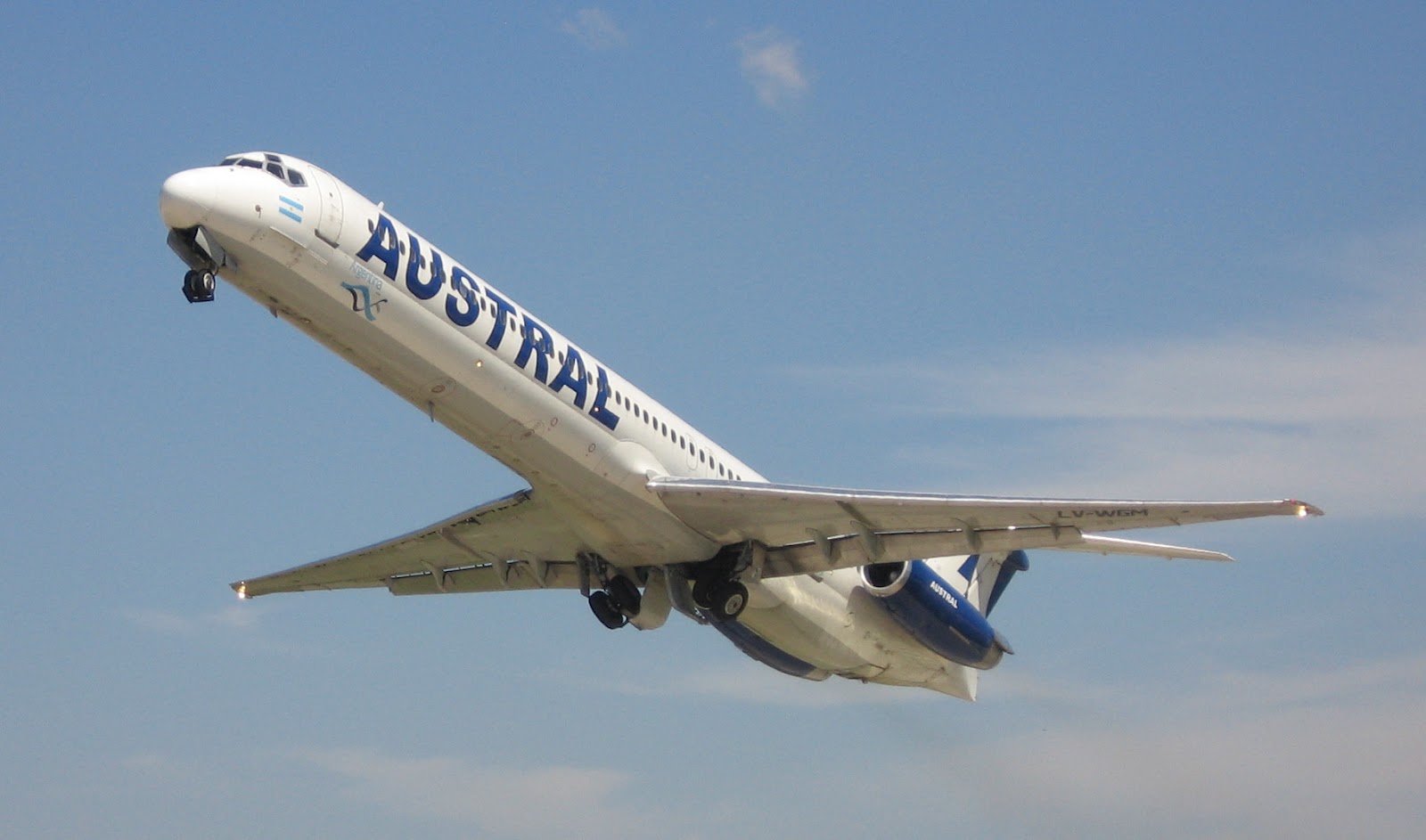
English-Language Blog covering Commercial Aviation in Argentina and Uruguay
Saturday, June 30, 2012
BQB Lineas Aereas Looking to Acquire two CRJ-200's for Regional Expansion
Blog Editor Phil Perry getting ready to board BQB Lineas Aereas ATR-72-212A CX-JPL on 16Sep11 to fly from Buenos Aires Aeroparque (AEP) to Punta del Este, Uruguay (PDP).
BQB owner Juan Carlos Lopez Mena is evaluating making a US$ 20 million capital injection into the carrier to acquire two CRJ-200 that would be used on new routes from Montevideo (MVD) to Sao Paulo (GRU), Río de Janeiro (GIG), and Buzios (BZC) in Brazil, plus Asunción (ASU), Santiago de Chile (SCL), and Santa Cruz de la Sierra, Bolivia (VVI). The airline's CEO, Juan Patricio López, has indicated that BQB is negotiating the purchase of the aircraft with their manufacturer Bombardier and the financing of the purchase with two international banks It is estimated that the expansion would add 80 new jobs to the airline's payroll. BQB currently flies a fleet of two ATR-72-200's mostly between Uruguay and Argentina.
Source: El Pais Uruguay 29Jun12
Photo: Laura Fernandez Perry
Friday, June 29, 2012
BQB Lineas Aereas Possible Expansion to Europe
BQB Lineas Aereas ATR-72-212A,
CX-JPL, (msn 816) at AEP on 11Oct10
Aviacion News reports that BQB Lineas Aereas of Uruguay reported US$ 150,000 profits on US$ 12 million in sales in its fiscal year which closed at the end of March 2012. The carrier, which flies two ATR-72-200's on regional routes, especially between the Uruguayan resort of Punta del Este and Argentina, is looking to add another ATR-72 or ATR-42 to the fleet.
Additionally, the airline confirms that it has talked with several European carriers, including Air Berlin and Virgin Atlantic, about starting joint flights to Europe. One proposal is to fly from Montevideo (MVD) to Madrid (MAD) three-times per week in cooperation with Air Europa, which already flies from the Rio de la Plata region to Spain, with flights from Buenos Aires Ezeiza (EZE) to Madrid (MAD) with A330-200's. There would apparently be special emphasis on carrying cargo.
Los Cipreses S.A, which owns BQB Lineas Aereas and the very successful Buquebus ferry company between Argentina and Uruguay, was approved by the Uruguayan aviation authorities in September 2010 for flights carrying passengers, cargo and mail to Madrid.
Sources: Aviacion News 17May12, 24May12
Photo: Phil Perry
Thursday, June 28, 2012
LV-BGZ - Sole Austral MD-83 in New Colors - Photo
LV-BGZ at Buenos Aires Aeroparque (AEP) on a foggy day, 26May12
LV-BGZ was rolled out of the hangar at Aeroparque after a five-month long "C" check and repaint in Austral's new colors on 01Mar12. Soon after the aircraft went into the hangar in October, it was decided that the MD-80's would be retired from service by April 2012 but work on the plane and repaint continued anyway. The aircraft apparently flew at least a couple of revenue flights before Austral retired the type from its fleet on 10Apr12, such as AU2881 from Ushuaia (USH) to Rio Gallegos (RGL) on 20Mar12, presumably continuing on to AEP.
LV-BGZ (msn 49906/1786) was originally delivered to Finnair on 15Nov90 as an MD-82 with registration OH-LMX. The aircraft went on to serve with Austrian Airlines and Air Plus Comet before being delivered to Austral on 10Dec06 at which time it was converted into an MD-83.
For several better-quality photos, check the following links scrolling down the pages for the photos:
Information Sources: http://www.airfleets.net/ficheapp/plane-md80-49906.htm
Photo: Phil Perry
Tuesday, June 26, 2012
PHOTO GALLERY: Austral MD-80
All photos taken by Phil Perry at Buenos Aires Aeroparque (AEP) between 2010 and 2012.
LV-WFN climbs out after taking off runway 31
LV-BHN landing on runway 13 with thrust reversers deployed
LV-BHH taxis to the terminal after landing
LV-BEG rotates off 31
LV-VGC stored in derelict condition without engines on
AEP's east side near where the aviation museum used to be.
LV-VCB is LV-VGC's neighbor, also in outdoor "storage"
LV-WGM on final approach to 31
LV-AYD lines up for takeoff on 31
LV-WGM climbs out after taking off from 13
Goodbye MD-80's ! ! !
Sunday, June 24, 2012
FLEET UPDATE: Austral Retired MD-80 Series from Service on 10Apr12
MD-83 LV-AYD prepares to take off from AEP's runway 31 on 11Feb12, about two months before it operated Austral's last MD-80 service.
Austral Lineas Aereas operated its last MD-80 service on 10Apr12 after 31 years' operations of the type. MD-83 LV-AYD (msn 53015/1818) flew the last scheduled passenger flight AU2883 from Rio Gallegos (RGL) to Buenos Aires - Aeroparque (AEP) arriving at 6:30am that morning.
LV-WFN (originally N10027) at AEP on 11Oct10.
In late 1978, Austral received authorization from the Argentine Aviation Secretariat to acquire five MD-80 aircraft. The first two planes, N10022 (msn 48024/948) and N10027 (msn 48025/952), departed the McDonnell Douglas factory in Long Beach, California, USA arriving at Austral's Buenos Aires Aeroparque base on 10Jan81. The first service was operated by N10027 on 11Jan81 with the two aircraft initially flying routes from Buenos Aires to Neuquen (NQN), the resorts of Bariloche (BRC) and Mar del Plata (MDQ), plus the important cities of Córdoba (COR) and Mendoza (MDZ). The third aircraft, N1003G (msn 48050/989), was delivered on 08Aug81. The fourth and fifth planes, N10028 and N10029, were painted in Austral's full colors and were ready for delivery but that part of the order was cancelled.
N10027 went on to be reregistered as LV-WFN in December 1993, flying its entire 31-year career for Austral until it operated its last flight on 02Feb12 to Bariloche (BRC). The aircraft flew 70,444 hours and 60,350 cycles in its career. On 17Mar12 the plane was ferried from Buenos Aires Aeroparque (AEP) to Cordoba (COR) for temporary storage until the airline decides what to do with it. Given its prominent history, there is much talk of LV-WFN joining an ex-Aerolineas Argentinas 737-200 at the Argentine National Aviation Museum at the Moron Air Force Base near Buenos Aires.
N10022 was reregistered LV-WPY. On 20Feb04 it lost a main landing gear wheel upon takeoff from AEP and a small fire erupted in the landing gear upon making an emergency landing at Buenos Aires Ezeiza (EZE) but it was quickly put out by fire crews. The aircraft was withdrawn from use on 16Jan07 and scrapped in April 2008.
N1003G sadly went on to crash on 12Jun88 when it hit eucalyptus trees on approach in fog to Posadas Airport in the northern Argentine province of Misiones. All 22 passengers and crew on board perished.
Other notable aircraft in the Austral fleet with their retirement dates:
Austral took delivery of four ex-AeroMexico MD-80s in the late 2000s with only one being painted in full Austral colors. The other three, all MD-88's, LV-BXA (msn 49928/1732), LV-BTI (msn 49927/1716), and LV-BTW (msn 49926/1715) remained in AeroMexico colors but had Austral "billboard" titles painted on the sides.
LV-BXA at AEP on 16Jan11
MD-88 LV-BXA was delivered to Austral on 19Mar09, entered service on 26Mar09 and operated its last revenue flight on 22Sep11. It was returned to the lessor on 16Dec11, flying from AEP to Lima (LIM), San Jose, Costa Rica (SJO), Miami (MIA) enroute to Victorville, California. The aircraft was reregistered as N372MS but this registration was cancelled on 16May12 suggesting that the aircraft will soon be scrapped.
LV-BTI at AEP on 17Sep10
MD-88 LV-BTI was returned to the lessor on 01Oct11, flying to Goodyear, Arizona, USA. It was reregistered as N379MS and might fly for another carrier.
MD-88 LV-BTW was returned to the lessor on 02Sep11, reregistered N382MS and scrapped.
Two of Austral's MD-80's stayed in Argentina being transferred to Andes Lineas Aereas, LV-ARF (49252/1169) and LV-BAY (49284/1209) both of them reportedly still operational with the airline.
Austral's sister carrier, Aerolineas Argentinas, also operated MD-80's with three of the most recent ones being MD-83 LV-VAG (53117/1951) and MD-88's LV-VBX (53047/2016) and LV-VBZ (53049/2031), all of which are currently stored and no longer operating with AR.
LV-VBZ taxis at AEP on 17Sep10
LV-VAG at AEP on 29Oct10
LV-VBX touches down on AEP's runway 13 on 06Feb11
Austral flew the MD-80 almost entirely on domestic Argentine service with some charters to / from neighboring countries as well.
Austral operated 37 MD-80 series aircraft in all with Aerolineas Argentinas operating 11 MD-80s but some of these aircraft might have flown with both airlines.
The aircraft type served the Argentine market well but has now been replaced at Austral by the smaller, yet more efficient, Embraer 190 series.
Sources: http://linea-ala.blogspot.com.ar/
http://aerospotter.blogspot.com.ar/
http://cabeceranorte.blogspot.com.ar/
www.airliners.net
www.airfleets.net
http://aviation-safety.net/database/record.php?id=19880612-0
http://aerospotter.blogspot.com.ar/
http://cabeceranorte.blogspot.com.ar/
www.airliners.net
www.airfleets.net
http://aviation-safety.net/database/record.php?id=19880612-0
Photos: Phil Perry
Saturday, June 23, 2012
Air Class Metro CX-LAS Disappearance Update
The search for the aircraft missing after departing Montevideo's Carrasco International Airport (MVD) on the evening of Wednesday 06Jun12 continued in the days after its disappearance without a trace.
Some plastic bags washed ashore near Carrasco and it was thought that maybe they were the type used by the airline to wrap cargo but this hypothesis was discarded when Air Class confirmed that the bags were of a different material than what they use. Hopes were raised when long streaks of a fluid were spotted on the surface of the Rio de la Plata some six miles southwest of Isla de Flores, near where the aircraft is thought to have gone down. Samples of the liquid were taken for testing to see if it was a petroleum-based or similar product, such as hydraulic fluid or the jet fuel used to power the Metro's turbine engines but the substance was too diluted to determine definitively what it was.
On Saturday, 09Jun12, three days after the plane went missing, the Uruguayan Air Force performed a demonstration flight with a twin-engined turboprop similar to the Metro seeking to recreate its flight path to possibly gain insights on what happened. The first objective was to determine if the radar used to track the Metro was working properly to make sure the trackings that it showed of the Metro's flight were accurate. This exercise confirmed that the radar was functioning normally.
Following the Metro's tracks, the air force plane made several abrupt moves emulating the final seconds that the Metro was on radar, first with a sharp left turn going out of its planned flight path, then back on to its routing, followed by a sharp right turn and another to the left before disappearing from the radar. The air force plane traced this routing simulating the Metro's flight with the exception of some maneuvers that were so extreme that they could have endangered the air force crew. Further analysis led to the conclusion that the Metro crew executed maneuvers that were unsafe but appeared to be in an attempt to recover from a critical flight situation. The Metro disappeared from radar when it was at 2,400 ft. and is presumed to have taken 5-10 seconds to hit the surface of the water reinforcing the earlier assumption that it went down very near Isla de Flores, some 10-12 miles off the coast of Uruguay.
Another theory that was considered was the possibility of a hijack since no trace of the plane has been found. One motivation for hijack would be drug dealers stealing a plane to use it for transporting drugs, especially because one such attempt took place at Montevideo's Melilla Airport in 2003. However, reviews of security cameras at MVD in the two hours prior to the Metro's departure revealed no one boarding the plane except the flight crew.
Also considered was the possibility that cargo of a hazardous nature might have been boarded, such as flammable or explosive materials, but a review of the freight manifests for the flight revealed little likelihood of "hazmat" making it onboard the Metro.
As of this writing, it appears that the Metro crashed into the sea with the loss of both crewmembers, Captain Walter Rigo (63) and First Officer Martin Riva (34). Both men became pilots because they loved to fly. "Walter disappeared doing one of the things he most loved: flying." said his family members. Martin's father, Julio Riva, said that his son had always wanted to fly. He worked at different jobs but always pursued his desire to become a professional pilot until he was hired by DHL three months before the Metro's disappearance. Martin commented that before being hired he paid to fly but now they were paying him to fly ! "He couldn't have been happier" commented the elder Riva.
Assuming that both men perished in the aircraft's disappearance, may they both rest in peace.
Sources: El Pais (Uruguay), 09Jun12, 11Jun12, 12Jun12, 15Jun12
Some plastic bags washed ashore near Carrasco and it was thought that maybe they were the type used by the airline to wrap cargo but this hypothesis was discarded when Air Class confirmed that the bags were of a different material than what they use. Hopes were raised when long streaks of a fluid were spotted on the surface of the Rio de la Plata some six miles southwest of Isla de Flores, near where the aircraft is thought to have gone down. Samples of the liquid were taken for testing to see if it was a petroleum-based or similar product, such as hydraulic fluid or the jet fuel used to power the Metro's turbine engines but the substance was too diluted to determine definitively what it was.
On Saturday, 09Jun12, three days after the plane went missing, the Uruguayan Air Force performed a demonstration flight with a twin-engined turboprop similar to the Metro seeking to recreate its flight path to possibly gain insights on what happened. The first objective was to determine if the radar used to track the Metro was working properly to make sure the trackings that it showed of the Metro's flight were accurate. This exercise confirmed that the radar was functioning normally.
Following the Metro's tracks, the air force plane made several abrupt moves emulating the final seconds that the Metro was on radar, first with a sharp left turn going out of its planned flight path, then back on to its routing, followed by a sharp right turn and another to the left before disappearing from the radar. The air force plane traced this routing simulating the Metro's flight with the exception of some maneuvers that were so extreme that they could have endangered the air force crew. Further analysis led to the conclusion that the Metro crew executed maneuvers that were unsafe but appeared to be in an attempt to recover from a critical flight situation. The Metro disappeared from radar when it was at 2,400 ft. and is presumed to have taken 5-10 seconds to hit the surface of the water reinforcing the earlier assumption that it went down very near Isla de Flores, some 10-12 miles off the coast of Uruguay.
Another theory that was considered was the possibility of a hijack since no trace of the plane has been found. One motivation for hijack would be drug dealers stealing a plane to use it for transporting drugs, especially because one such attempt took place at Montevideo's Melilla Airport in 2003. However, reviews of security cameras at MVD in the two hours prior to the Metro's departure revealed no one boarding the plane except the flight crew.
Also considered was the possibility that cargo of a hazardous nature might have been boarded, such as flammable or explosive materials, but a review of the freight manifests for the flight revealed little likelihood of "hazmat" making it onboard the Metro.
As of this writing, it appears that the Metro crashed into the sea with the loss of both crewmembers, Captain Walter Rigo (63) and First Officer Martin Riva (34). Both men became pilots because they loved to fly. "Walter disappeared doing one of the things he most loved: flying." said his family members. Martin's father, Julio Riva, said that his son had always wanted to fly. He worked at different jobs but always pursued his desire to become a professional pilot until he was hired by DHL three months before the Metro's disappearance. Martin commented that before being hired he paid to fly but now they were paying him to fly ! "He couldn't have been happier" commented the elder Riva.
Assuming that both men perished in the aircraft's disappearance, may they both rest in peace.
Sources: El Pais (Uruguay), 09Jun12, 11Jun12, 12Jun12, 15Jun12
Sunday, June 17, 2012
PLUNA: Leadgate to Exit Ownership & Management of Carrier
PLUNA CRJ-900, CX-CRM, c/c 15274, delivered 29Oct11.
Spotted at Buenos Aires Aeroparque (AEP)
on 11Feb12 preparing to take off Runway 31.
AGREEMENT
The Uruguayan government, led by Transport Minister Enrique Pintado and Economy Minister Fernando Lorenzo came to an agreement with Leadgate, the main partners in Sociedad Aeronautica Oriental (SAO), on Friday, June 16, for SAO to give up its 75% shareholding in PLUNA without any renumeration and with the shares to be placed in a trust called a "fideicomiso" until new investors are found that will purchase the shares. Representing Leadgate were executives from the company that also acted as PLUNA senior management, Matias Campiani (then CEO of PLUNA), Sebastian Hirsch, and Arturo Alvarez Demalde.
PREVIOUS OWNERSHIP STRUCTURE
Until the recent agreement, PLUNA was 25% owned by the Uruguayan government and 75% owned by SAO, comprised of Leadgate holding 66.6% of the shares and Canadian commuter airline Jazz, which paid US$ 15.1 million for its 33.3% stake in SAO in 2009.
FINANCIAL PROBLEMS
PLUNA has been accumulating debt for many years, including since Leadgate's purchase of 75% of the company in 2007 for US$ 15 million. In the two years prior to Leadgate acquiring an equity interest in the Uruguayan airline and taking over its management, PLUNA was 100% owned and managed by the Uruguayan government racking up losses totalling US$ 41.7 million. Since Leadgate entered the picture in 2007 through February 2012, the airline has lost an additional US$ 85.7 million with US$ 11.8 million of that coming in the period July 2011 through February 2012. Losses have apparently been accumulating at an even faster rate since then due to a number of factors, including a sharp drop in traffic resulting from Argentine government currency restrictions on Argentines acquiring foreign currency, including for travel outside the country.
The accumulated losses have taken a toll on PLUNA's balance sheet with 2011 showing Assets of US$ 290 million and Liabilities of US$ 301 million for a debt / assets ratio of 1.04 and a negative equity situation. By Uruguayan law the company is considered insolvent.
The company has also been suffering cash-flow problems not even being able to pay ANCAP, the Uruguayan state-owned oil company, for the fuel it has supplied. On May 31, PLUNA paid ANCAP US$ 600,000 but missed the deadline on at least one payment since then. In all, the carrier owes ANCAP US$ 25 million for past fuel deliveries. Additionally, a US$ 9 million payment to Canadian bank Scotiabank for seven CRJ-900 aircraft purchased in 2007 is due in August, putting further strain on the airline's finances.
PLUNA CRJ-900, CX-CRK, c/n 15239, delivery date 30Oct10
landing at Buenos Aires Aeroparque (AEP) with thrust reversers deployed on 06Feb11.
URUGUAYAN GOVERNMENT PROPOSED SOLUTION & LEADGATE OBJECTIONS
This dire financial picture lead the Uruguayan government to recently determine that a capital injection of US$ 30 million was required to keep the airline operating and solvent while a solution could be found to make the airline viable in the longer term. In accordance with its ownership stake, the government was to supply 25% of this amount, US$ 7.5 million, with the SAO partners to provide the US$ 22.5 million balance. However, the private partners declined to invest further in the carrier under the current operating conditions, which they consider not conducive to turning around the carrier's finances.
They cited several factors as being damaging to PLUNA's prospects, including:
1) High fuel prices.
2) Argentine government restrictions on foreign currency acquisitions by
Argentines, discouraging travel.
3) Drop in demand due to slowing regional economies around South America.
4) The denial by the Argentine government of route rights to cities such as
Bariloche (BRC) and Mendoza (MDZ), which are essential to the carrier's
Montevideo (MVD) -based hub with primary spokes in Argentina and
Brazil. To illustrate the extent of the restrictions, Argentina allows PLUNA to
fly to only three airports in its territory while Brazil allows service to nine
different airports.
5) Argentine government subsidies to Aerolineas Argentinas of approx. US$ 750
million annually giving the carrier an unfair competitive advantage .
Editor's Note: Other airlines in Mercosur all have to deal with the above conditions but the route denials into Argentina probably hurt PLUNA the most because its MVD hub requires traffic flowing between Argentine and Brazilian cities.
Some of the first consequences of this situation were PLUNA dropping Montevideo (MVD) to Campinas, Brazil (VCP) service, reduction of frequencies from MVD to Curitiba (CWB), Belo Horizonte (CNF) and Porto Alegre (POA) all in Brazil plus Asuncion (ASU) in Paraguay. Its recently started venture into the Chilean domestic market flying from Santiago (SCL) to Concepcion (CCP) was also dropped.
PLUNA CRJ-900, CX-CRI, c/n 15234, delivery date 29Sep10
at Buenos Aires Aeroparque (AEP) on 20Mar11.
TERMS OF FINAL AGREEMENT
The Uruguayan government's response to SAO's refusal to invest more was that the private investor group could no longer contribute to the carrier's success and must abandon its management role and ownership in the airline. Leadgate agreed to move in this direction and negotiations between the government and Leadgate as majority investor in SAO started around Friday, June 8.
Leadgate asked for the government to purchase its shares for US$ 18 million but the government indicated that it was not going to pay anything for them, apparently alleging mismanagement of the carrier by Leadgate. In turn, Leadgate requested that the government agree not to bring any lawsuits against them and that one of Leadgate's senior executives, Sebastian Hirsch, be allowed to stay on for 90 days to make sure that nobody remaining at the carrier tried to paint a "revised" picture of what transpired under the private group's management. After resisting these two conditions for several days, Mr. Pintado of the Transport Ministry and Mr. Lorenzo of the Economy Ministry both agreed to include them as part of the final agreement on Friday, June 15.
SAO's 75% share, held by Leadgate and Jazz, will be deposited by the two private entities into a "fideicomiso" (trust) managed by the Montevideo Stock Market until their sale to a future private investor. Neither Leadgate nor Jazz will receive the proceeds of the sale of the stock, Jazz already having written off this investment as a loss. Presumably the cash generated from the stock will be used by PLUNA as operating capital. The state made it clear that it does not want to be the sole owner of PLUNA so it will not acquire the shares.
It was also determined that Jazz, that has expressed an interest in acquiring SAO's interest, will be given 30 days to bid on the shares and the government will approve the sale if it believes that the amount offered is adequate. Otherwise, the 75% shares will be opened to public bid. Note that it appears that with Jazz having written off its 33.3% share of SAO (equal to 25% of all of PLUNA's shares), many of the shares that it would buy would in effect be shares that it previously owned !
Should Jazz not end up with the 75% equity stake another possible buyer would be Juan Carlos Lopez Mena, owner of the Buquebus ferry lines operating between Argentina and Uruguay and also of BQB Lineas Aereas, a Uruguayan airline and competitor of PLUNA on some routes.
OBJECTIVES
The Uruguayan government's main objectives throughout this process were:
1) Assure PLUNA's long-term viability.
2) Guarantee no service interruption.
3) Preserve the jobs of 900 PLUNA employees.
Another party interested in the negotiations was the Canadian government because four Canadian companies have a stake in the future success of PLUNA:
1) PLUNA still owes Scotiabank US$ 140 million of the original US$ 203 million
purchase price of seven Bombardier CRJ-900's in 2007. The Uruguayan
government guaranteed the purchase. Payments are made each February
and August.
2) US$ 120 million is owed to Export Development Canada for the lease of six
other CRJ-900's.
3) The CRJ-900's manufacturer, Bombardier, supplies spare parts for the aircraft.
4) Jazz, which has invested US$ 15 million so far and would like to see a return
on that investment.
CONCERNS OF POSSIBLE FRAUD
On a closing note, legislators from opposition parties to the current Uruguayan President, Jose Mujica, of the Frente Amplio party, have initiated preocedings to audit PLUNA's finances under Leadgate, alleging the payment of high fees to consulting companies and possible excessive compensation to PLUNA executives.
They have especially objected to the clause in the agreement granting immunity from lawsuits and that a Leadgate executive will stay on for 90 days, apparently concerned that this may lead to a coverup of possible dishonest practices by management.
Sources: Aviacion News: 07Jun12, 14Jun12
El Observador: 12Jun12
El Pais Uruguay: 13Jun12, 14Jun12, 15Jun12, 16Jun12
Friday, June 15, 2012
ROUTE UPDATE: TAM dropping Buenos Aires Aeroparque (AEP) - Porto Alegre (POA) Route
Effective 02Jul12, TAM is dropping Buenos Aires Aeroparque (AEP) - Porto Alegre (POA) service after operating the route on a once-daily basis with A320's since late 2010. On the same day, the carrier is transferring three of its five daily Buenos Aires - Rio de Janeiro flights from Ezeiza (EZE) to Aeroparque (see 10Jun12 posting).
Source: http://airlineroute.net/2012/06/15/jj-poaaep-jul12/ via Eric Trum
Thursday, June 14, 2012
JetBlue to fly 787's or A350's to Buenos Aires, Rio de Janeiro, Sao Paulo and Santiago ?
The blog www.nycaviation.com reports that JetBlue CEO David Barger, speaking at the IATA Annual General Meeting in Beijing on June 11, talked about the possibility of the carrier acquiring 787's or A350XWB's for flights to Latin America, but not Europe or Asia where there is already "plenty of service". The widebody aircraft would come online sometime after 2015 and likely be used out of the airline's New York JFK hub.
JetBlue recently announced a major expansion of its international facilities at JFK called T5i, signifying international service at the airline's Terminal 5. Several of the new terminal's gates will be equipped for widebody use.
Editor's Comments:
Looking at JetBlue's current route map, the airline flies to many points in the Caribbean, plus a few in Mexico and Central America, extending to Bogota, Colombia in the northern part of South America. JetBlue's existing fleet of A320's can serve these adequately without adding longer-range 787's or A350XWB's so it would seem that the purpose of widebody aircraft would be to serve new destinations in Latin America that are beyond the range of the A320's, such as Buenos Aires, Rio de Janeiro, Santiago and Sao Paulo.
Brazil, especially, would seem to be a good possibility given the large amount of passenger traffic between Brazil and the USA (about 1.4 million passengers originating just from Brazil annually). Also, JetBlue founder David Neeleman grew up in Brazil and also founded low-cost Brazilian airline Azul, so a tie-in between the two carriers sharing each other's codes would seem to be a natural. Finally, JetBlue already has marketing relationships with both LAN and TAM that could be used to feed each other's networks.
Researching the Internet for information on JetBlue's proposed acquisition of widebody aircraft, one member of www.airlinepilotforums.com commented that it is time for JetBlue and its pilots to negotiate a contract again and the mention of widebodies is meant to please the pilots who always love the prospect of flying "bigger metal". Another forum spoke of the airline's possible plans to acquire widebodies back in 2010 so this is not the first time the subject has come up, lending credence to the skeptics. However, two of the most interesting comments were also posted on www.airlinepilotforums.com noting how JetBlue has often gone after American Airlines' business:
"The aircraft will be used on former AA routes that AA will give up to JB. Just as they have always done. What routes does JB fly that were not AA or AE routes before?"
To which another member replied:
"Agree 100%. Barger mentions South America in reference to future widebody expansion, AA's bread & butter (just like BOS and the Caribbean used to be)."
USA - South America is one of the few attractive air travel markets where there is little, if any, low-cost airline service, so it would appear that there is definitely an opportunity for JetBlue to expand here. Maybe JetBlue operating JFK-EZE non-stop is in the future ?
JetBlue recently announced a major expansion of its international facilities at JFK called T5i, signifying international service at the airline's Terminal 5. Several of the new terminal's gates will be equipped for widebody use.
Editor's Comments:
Looking at JetBlue's current route map, the airline flies to many points in the Caribbean, plus a few in Mexico and Central America, extending to Bogota, Colombia in the northern part of South America. JetBlue's existing fleet of A320's can serve these adequately without adding longer-range 787's or A350XWB's so it would seem that the purpose of widebody aircraft would be to serve new destinations in Latin America that are beyond the range of the A320's, such as Buenos Aires, Rio de Janeiro, Santiago and Sao Paulo.
Brazil, especially, would seem to be a good possibility given the large amount of passenger traffic between Brazil and the USA (about 1.4 million passengers originating just from Brazil annually). Also, JetBlue founder David Neeleman grew up in Brazil and also founded low-cost Brazilian airline Azul, so a tie-in between the two carriers sharing each other's codes would seem to be a natural. Finally, JetBlue already has marketing relationships with both LAN and TAM that could be used to feed each other's networks.
Researching the Internet for information on JetBlue's proposed acquisition of widebody aircraft, one member of www.airlinepilotforums.com commented that it is time for JetBlue and its pilots to negotiate a contract again and the mention of widebodies is meant to please the pilots who always love the prospect of flying "bigger metal". Another forum spoke of the airline's possible plans to acquire widebodies back in 2010 so this is not the first time the subject has come up, lending credence to the skeptics. However, two of the most interesting comments were also posted on www.airlinepilotforums.com noting how JetBlue has often gone after American Airlines' business:
"The aircraft will be used on former AA routes that AA will give up to JB. Just as they have always done. What routes does JB fly that were not AA or AE routes before?"
To which another member replied:
"Agree 100%. Barger mentions South America in reference to future widebody expansion, AA's bread & butter (just like BOS and the Caribbean used to be)."
USA - South America is one of the few attractive air travel markets where there is little, if any, low-cost airline service, so it would appear that there is definitely an opportunity for JetBlue to expand here. Maybe JetBlue operating JFK-EZE non-stop is in the future ?
Wednesday, June 13, 2012
PLUNA of Uruguay Losing Money, Looking for Possible Bailout
PLUNA CRJ-900, CX-CRF at AEP
PLUNA (Primeras Lineas Uruguayas de Navegacion Aerea) has been losing money on its route network for a variety of reasons that have been aggravated lately by changing international circumstances.
The carrier flies a route network based at its Montevideo, Uruguay (MVD) hub to 13 destinations; 1 in Chile, 1 in Paraguay, 2 in Argentina and 9 in Brazil. Additionally, PLUNA flies from Buenos Aires Aeroparque (AEP) to Punta del Este, Uruguay (PDP) and the airline recently introduced service domestically within Chile from Santiago (SCL) to Concepcion (CCP), taking advantage of Chile's "open skies" policies.
Much of PLUNA's passenger traffic is connecting through its MVD hub with its most important origin-and-destination route being Montevideo (MVD) to Buenos Aires Aeroparque (AEP).
The airline recently had its best summer ever carrying passengers from AEP to Punta del Este, the Uruguayan high-end beach resort. This is a short route across the Rio de la Plata separating Argentina from Uruguay but PLUNA can charge relatively high fares on this route due to the premium nature of the leisure traffic traveling on this segment.
However, the airline has been suffering financial losses recently due to:
* Increasing fuel prices
* The slowing of the Brazilian economy from a 7.5% growth rate in 2010 to
2.7% in 2011.
* Recent Argentine government policies that have made it difficult for Argentines
to acquire US dollars or other hard currency making international travel
difficult. This has caused a recent sharp drop in the number of Argentines
traveling out of the country, impacting perhaps PLUNA's most important source
of passenger traffic.
PLUNA joins several other carriers that have felt the effects of rising fuel prices and slowing South American economies including LAN and TAM, which saw profits drop 22% in the first quarter of 2012 and GOL Lineas Aereas of Brazil, which recently laid off 1,200 workers to cut costs.
Complicating matters for PLUNA, its main competitors are much larger airlines with greater resources, such as LAN and TAM, plus the heavily-subsidized Argentine national airline, Aerolineas Argentinas. Also, PLUNA would have liked to develop Argentine markets the same way that it has done in Brazil where it flies to nine different airports, but so far the Argentine government has only authorized PLUNA to serve three airports, Buenos Aires Aeroparque (AEP), where it has flown for decades, plus Buenos Aires Ezeiza (EZE) and Cordoba (COR).
The Uruguayan government has offered to assist the airline with a US$ 30 million bailout but private investors want to see credible plans for overcoming the airline's current challenges before commiting any funds (PLUNA is 25% owned by the Uruguayan government with 75% in the hands of private investment group Leadgate of which a portion belongs to Canadian commuter airline Jazz).
LATE BREAKING NEWS: El Observador Uruguayan newspaper reported on Tuesday, 12Jun12 that the Uruguayan government and Leadgate/Jazz have come to an agreement that the private investors will abandon their ownership stake in PLUNA. More news is likely to follow in the coming days.
Source: http://www.businessweek.com/ap/2012-06/D9V6MBJG1.htm via
http://worldairlinenews.com/
Sunday, June 10, 2012
ROUTE UPDATE: TAM to transfer 3 out of 5 Sao Paulo Guarulhos (GRU) flights from EZE to AEP
TAM A320, PR-MAG c/n 1832 at AEP
TAM Brazilian Airlines will transfer three out of its five daily Sao Paulo Guarulhos (GRU) - Buenos Aires flights from Ezeiza (EZE) to Aeroparque (AEP) airport, effective 02Jul12. Aeroparque is much more convenient for most travelers than Ezeiza because it is actually in the city of Buenos Aires only some 3-4 miles from the downtown business district compared to Ezeiza, which is about 20 miles southwest of the city.
TAM Brazilian Airlines (JJ) already flies A320's from AEP to Porto Alegre (POA) Brazil and its Paraguayan affiliate, also operating under the name TAM (PZ), flies from AEP to Asuncion (ASU) Paraguay and Rio de Janeiro Galeao (GIG). The new AEP-GRU flights will be more significant because Sao Paulo is Brazil's largest city and most important business center plus GRU is a huge hub for TAM with flights departing the airport to destinations all over Brazil plus North America and Europe.
TAM's Sao Paulo - Buenos Aires service will look like this after the change:
Sao Paulo – Buenos Aires Aeroparque:
Flight Routing Dep Arr Equipment Days
JJ8014 GRUAEP 0715 1005 A320 Daily
JJ8010 GRUAEP 1120 1406 A320 Daily
JJ8008 GRUAEP 1830 2110 A320 Daily
JJ8009 AEPGRU 1105 1410 A320 Daily
JJ8005 AEPGRU 1505 1750 A320 Daily
JJ8015 AEPGRU 2210 0055+1 A320 Daily
Sao Paulo – Buenos Aires Ezeiza:
Flight Routing Dep Arr Equipment Days
JJ8000 GRUEZE 0835 1125 A330 Daily
JJ8018 GRUEZE 1420 1710 A320 Daily
JJ8019 EZEGRU 1345 1635 A320 Daily
JJ8011 EZEGRU 1810 2050 A320 Daily
Source: http://airlineroute.net/2012/06/07/jj-bue-jul12/ via Eric Trum
Saturday, June 9, 2012
Details on "Search and Rescue" of Missing Air Class Metro CX-LAS
The search for Air Class Metro CX-LAS started on Wednesday night, 06Jun12, at 2200 hours, two hours after the aircraft went missing, when a Uruguayan Air Force aircraft took off from a nearby air force base. This plane was joined by the Uruguayan Navy ship ROU "Maldonado" that set sail at 0200 on Thursday morning in the direction of Isla de Flores some 10 miles off the Uruguayan coast near the aircraft's last-known position.
Throughout the day on Thursday 07Jun12 two FAU (Fuerza Aerea Uruguaya) aircraft - a CASA 212 "Aviocar" and Cessna (no information on which model) - and an AS-365 "Dauphin" helicopter performed an aerial search. Accompanied by the ROU "Maldonado" and two expeditions mounted by the Maritime Rescue Association, the search started at daybreak from the port of Montevideo eastwards as far as Piriapolis.
A reporter for El Pais, Uruguay's leading newspaper, was on board the last search flight of the day on a CASA-212 that departed Montevideo at 1715 hours. Nine crewmembers - the captain, two first officers and six observers - manned the aircraft plus three reporters and two photographers accompanied the flight.
The plane flew parallel passes about two miles apart back and forth around Piriapolis Bay at a flight level of about 1,000 ft. The observers looked out the side windows of the CASA but the flightcrew also dropped the rear loading ramp of the plane and three of the observers secured themselves to the seats and looked out the wide-open rear of the aircraft with binoculars looking for any signs of debris that might be from the Metro. At 1812 hours with the light of day diminishing, the rear loading ramp was closed and the CASA headed back to Montevideo without finding anything.
Also joining the search were two Uruguayan Navy ships equipped with sonar, the "Oyarbide" and "Paysandu", which did "sweeps" of the sea floor, only 12-15 meters deep, in a three mile by three mile square area corresponding to the last known position of the Metro. Unfortunately, neither ship found anything resembling remains of the aircraft or crew but will continue working throughout the weekend weather permitting.
Should remains be found, the Uruguayan Navy ship "Vanguardia" will be deployed with divers trained to recover bodies, if necessary. Recovery of the aircraft itself would come at a later date.
On Saturday (the day of this writing) the Argentine Air Force was due to join the search with an aircraft searching Argentine territorial waters in the area around Mar del Plata, about 200 miles south of the last position of the Metro.
Sources:
http://www.elpais.com.uy/12/06/07/ultmo_645137.asp?utm_source=news-elpais&utm_medium=email&utm_term=text-link&utm_content=Extienden%20zona%20de%20b%C3%BAsqueda%20para%20hallar%20avi%C3%B3n%20desaparecido&utm_campaign=El%20Pa%C3%ADs%20al%20Mediod%C3%ADa
http://www.elpais.com.uy/120608/pciuda-645309/ciudades/sin-rastro-del-avion-perdido-en-vuelo/
http://www.elpais.com.uy/120608/ultmo-645319/ultimo-momento/retomaron-busqueda-del-avion-desaparecido-en-vuelo/?keepThis=true&TB_iframe=true&height=500&width=950&caption=El+Pa%25C3%25ADs+Digital+-+%25C3%259Altimo+Momento
http://www.elpais.com.uy/120609/ultmo-645501/ultimomomento/argentina-se-suma-a-tareas-de-busqueda-del-avion/
Throughout the day on Thursday 07Jun12 two FAU (Fuerza Aerea Uruguaya) aircraft - a CASA 212 "Aviocar" and Cessna (no information on which model) - and an AS-365 "Dauphin" helicopter performed an aerial search. Accompanied by the ROU "Maldonado" and two expeditions mounted by the Maritime Rescue Association, the search started at daybreak from the port of Montevideo eastwards as far as Piriapolis.
A reporter for El Pais, Uruguay's leading newspaper, was on board the last search flight of the day on a CASA-212 that departed Montevideo at 1715 hours. Nine crewmembers - the captain, two first officers and six observers - manned the aircraft plus three reporters and two photographers accompanied the flight.
The plane flew parallel passes about two miles apart back and forth around Piriapolis Bay at a flight level of about 1,000 ft. The observers looked out the side windows of the CASA but the flightcrew also dropped the rear loading ramp of the plane and three of the observers secured themselves to the seats and looked out the wide-open rear of the aircraft with binoculars looking for any signs of debris that might be from the Metro. At 1812 hours with the light of day diminishing, the rear loading ramp was closed and the CASA headed back to Montevideo without finding anything.
Also joining the search were two Uruguayan Navy ships equipped with sonar, the "Oyarbide" and "Paysandu", which did "sweeps" of the sea floor, only 12-15 meters deep, in a three mile by three mile square area corresponding to the last known position of the Metro. Unfortunately, neither ship found anything resembling remains of the aircraft or crew but will continue working throughout the weekend weather permitting.
Should remains be found, the Uruguayan Navy ship "Vanguardia" will be deployed with divers trained to recover bodies, if necessary. Recovery of the aircraft itself would come at a later date.
On Saturday (the day of this writing) the Argentine Air Force was due to join the search with an aircraft searching Argentine territorial waters in the area around Mar del Plata, about 200 miles south of the last position of the Metro.
Sources:
http://www.elpais.com.uy/12/06/07/ultmo_645137.asp?utm_source=news-elpais&utm_medium=email&utm_term=text-link&utm_content=Extienden%20zona%20de%20b%C3%BAsqueda%20para%20hallar%20avi%C3%B3n%20desaparecido&utm_campaign=El%20Pa%C3%ADs%20al%20Mediod%C3%ADa
http://www.elpais.com.uy/120608/pciuda-645309/ciudades/sin-rastro-del-avion-perdido-en-vuelo/
http://www.elpais.com.uy/120608/ultmo-645319/ultimo-momento/retomaron-busqueda-del-avion-desaparecido-en-vuelo/?keepThis=true&TB_iframe=true&height=500&width=950&caption=El+Pa%25C3%25ADs+Digital+-+%25C3%259Altimo+Momento
http://www.elpais.com.uy/120609/ultmo-645501/ultimomomento/argentina-se-suma-a-tareas-de-busqueda-del-avion/
Subscribe to:
Posts (Atom)